EMDR Therapy in Florida
EMDR therapy in Florida can help when you understand logically that something is over, but your emotions, body, or nervous system still react as though it is happening now. Eye Movement Desensitization and Reprocessing (EMDR) uses a structured process to help your brain work through distressing experiences. Over time, those experiences can carry less emotional intensity and have less influence on how you react today.
What is EMDR Therapy?
EMDR stands for Eye Movement Desensitization and Reprocessing. It is based on the idea that when an experience is overwhelming, the brain may not fully process and integrate the information connected to it. The memory can remain linked to the emotions, physical sensations, images, and beliefs that were present when the experience occurred.
EMDR helps the brain resume that processing. During treatment, you briefly focus on aspects of an experience while engaging in bilateral stimulation, such as guided eye movements or alternating stimulation. Over time, the memory can become more integrated—you still know what happened, but it may no longer feel as though part of you is still living in it.
What Happens During an EMDR Session?
EMDR is more than simply thinking about a difficult memory while moving your eyes back and forth. Treatment follows a structured process that begins with understanding your history, identifying what you want to change, and making sure you have strategies to stay grounded before processing begins.
When you are ready for processing, we identify specific aspects of an experience, including the image or situation connected to it, the negative belief you associate with it, the emotions you notice, and where you feel the response in your body. Your therapist guides you through bilateral stimulation while you briefly notice what comes up. You do not have to force a particular response or know what you should experience.
The 8 Phases of EMDR Therapy
EMDR follows eight phases rather than jumping immediately into processing difficult memories. The eight phases help us understand what is happening and prepare you for the work. They also guide us through processing distressing experiences and evaluating your progress over time.
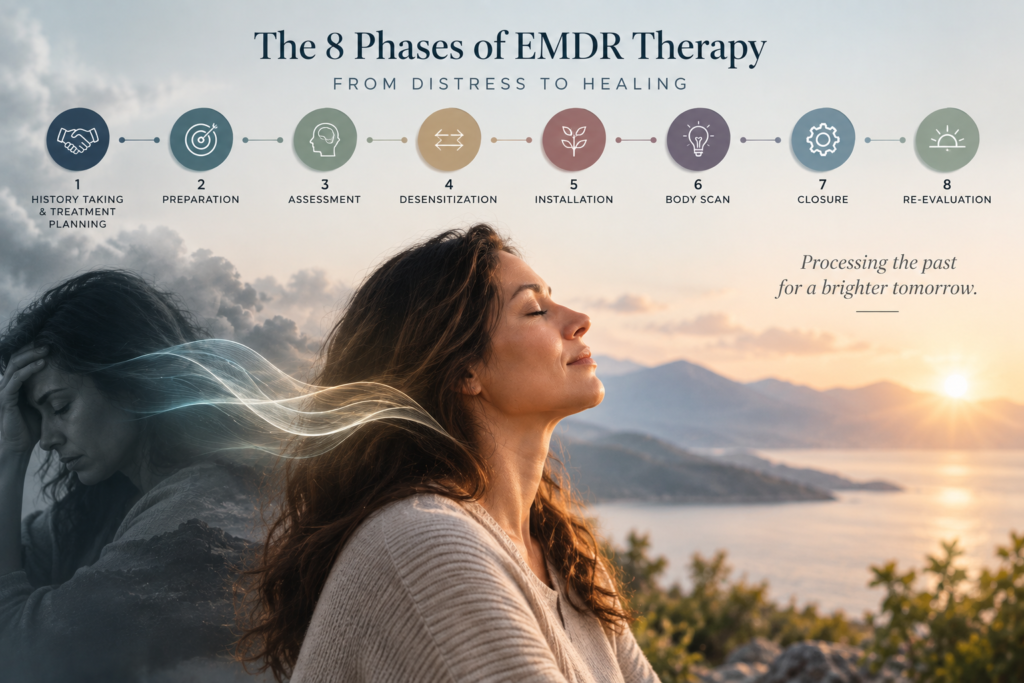
1. History Taking & Treatment Planning — We identify your concerns, relevant experiences, current triggers, and the changes you want to make.
2. Preparation — You learn what to expect from EMDR and develop strategies for staying grounded and managing distress.
3. Assessment — We identify the specific memory or experience to target, along with the associated beliefs, emotions, and body sensations.
4. Desensitization — You use bilateral stimulation while briefly focusing on the target and noticing what comes up during processing.
5. Installation — We strengthen a more adaptive belief that better reflects what you know and believe about yourself now.
6. Body Scan — You notice whether any distress or physical tension connected to the experience remains in your body.
7. Closure — Each session ends with attention to stabilization and helping you return to the present.
8. Reevaluation — At a later session, we check the target again to see what has changed and determine what needs attention next.
What Can EMDR Therapy Help With?
EMDR can help address experiences and patterns that continue to cause distress, even when you understand them logically. Depending on your needs and treatment goals, we may use EMDR therapy to address:
- Traumatic or overwhelming experiences
- Childhood trauma and difficult early experiences
- PTSD and trauma-related symptoms
- Anxiety connected to past experiences
- Distressing memories or triggers
- Negative beliefs about yourself
- Shame and self-criticism
- Grief and loss
- Relationship experiences that continue to affect you
- Specific fears or experiences that still produce a strong emotional or physical reaction
Do I Have to Talk About Everything That Happened?
No. EMDR does not require you to describe every detail of an experience out loud. We need enough information to understand what we are working on and guide the process, but you remain in control of what you choose to share.
For some people, this makes EMDR especially helpful when they understand that an experience is affecting them but do not want therapy to involve repeatedly retelling the entire story. The focus is on helping your brain process what remains unresolved, not making you relive every detail.
Can EMDR Therapy Be Done Online?
Yes. EMDR can be provided through secure online therapy sessions. For telehealth, we can adapt bilateral stimulation using guided eye movements or alternating tapping. We choose the method that works best for you.
We provide online EMDR therapy to clients throughout Florida, allowing you to participate from a private, comfortable space without traveling to an office. As with in-person EMDR, we assess your needs, readiness, and ability to remain regulated during processing before deciding how to proceed.
Standard EMDR Sessions vs. EMDR Intensives
Standard EMDR therapy is available in 55-minute sessions. This lets us work through treatment gradually as part of ongoing therapy, with time between sessions to process what comes up.
EMDR intensives are available in half-day and full-day formats. Instead of stopping when a traditional therapy hour ends, an intensive gives us more time for preparation, processing, breaks, and integration within the same appointment. This format may be a good fit if you have a specific experience or treatment goal you want to focus on.
Is EMDR Right For Me?
EMDR can be helpful for many people, but it is not automatically the right approach for every person or every concern. Before beginning processing, we look at what you want to address, how you currently respond to distress, the supports and coping strategies you already have, and whether EMDR fits your treatment goals.
You do not need to arrive knowing whether EMDR is right for you. We can talk through what you are experiencing, answer your questions, and determine together whether EMDR, IFS-informed parts work, another therapeutic approach, or a combination of approaches makes the most sense.
Ready to Learn More About EMDR?
You do not have to know whether EMDR is the right treatment before reaching out. We can talk about what you are experiencing, what you would like to change, and whether EMDR fits your needs and goals.