Burnout in high-functioning adults can be easy to miss. You may still be working, meeting deadlines, taking care of other people, and handling everything that needs to get done—while privately feeling exhausted, overwhelmed, irritable, or increasingly disconnected from the life you worked so hard to build.
When Success Starts to Feel Like Survival
You may be used to being the person who gets things done. Other people rely on you, you solve problems, and you keep moving even when you are exhausted. From the outside, you may still look successful and completely in control.
But functioning well does not always mean you are doing well. When slowing down feels uncomfortable, asking for help feels harder than doing it yourself, or your mind never really leaves work and responsibility behind, being capable can start to come at a cost.
Signs of Burnout in High-Functioning Adults
Burnout does not always mean you stop functioning. You may continue performing at a high level while noticing changes in how you feel, think, or relate to the people around you. Signs can include:
- Feeling exhausted even when you are still getting everything done
- Becoming more irritable or impatient than usual
- Difficulty concentrating or making decisions
- Feeling emotionally disconnected or numb
- Losing interest in work or activities you normally care about
- Dreading responsibilities you once handled easily
- Difficulty relaxing without feeling guilty
- Feeling like there is always something else you should be doing
- Taking on more because delegating or asking for help feels uncomfortable
- Trouble setting boundaries with work, family, or other responsibilities
- Feeling resentful while continuing to say yes
- Wondering how much longer you can keep functioning at this pace
Why High-Functioning Adults Burn Out
High-functioning adults often become very good at pushing through stress. You may have learned to rely on yourself, anticipate problems, take responsibility, and keep going regardless of how you feel.
Those qualities can help you build a successful life, but they can also make it difficult to recognize when you have reached your limits. Over time, constantly operating in problem-solving mode can leave little room for rest, flexibility, or your own needs.
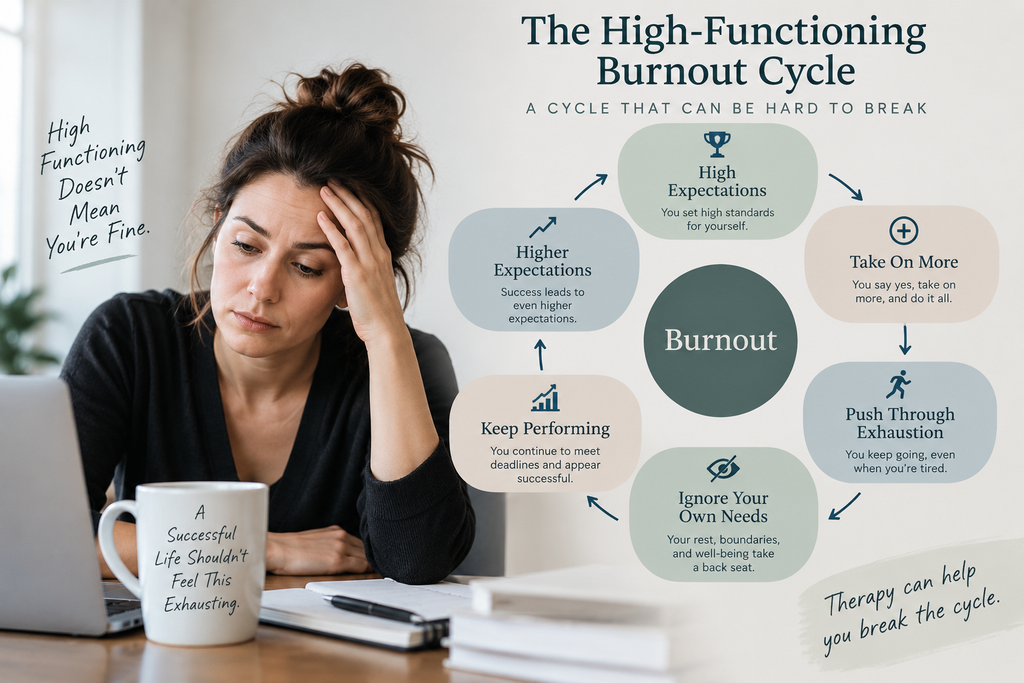
When Being the Reliable One Becomes Too Much
You may be the person everyone turns to—the one who handles the crisis, remembers what needs to happen, solves the problem, and rarely lets things fall apart.
Over time, constantly being the reliable one can create an expectation that you will keep carrying more. You may struggle to say no, delegate, or ask for help because doing it yourself feels easier, faster, or safer. Eventually, competence can turn into overfunctioning, leaving you responsible for far more than one person can reasonably carry.
How Therapy Can Help With Burnout
Therapy can help you understand what keeps you stuck in a cycle of overworking, overfunctioning, and pushing through exhaustion. Together, we look at the beliefs and patterns that make it difficult to slow down, set boundaries, delegate, or prioritize your own needs.
The goal is not to make you less ambitious or capable. It is to help you keep the strengths that have served you while developing a more sustainable way to work, lead, care for others, and live.
Burnout, Boundaries & Overfunctioning
Burnout is not always caused by having too much to do. Sometimes the deeper problem is feeling responsible for too much.
You may automatically step in when something needs to be handled, take responsibility for other people’s problems, or agree to things even when you are already stretched thin. Therapy can help you recognize where responsibility ends, set boundaries without excessive guilt, and stop automatically carrying what does not belong to you.
Burnout in Professionals, Leaders & Executives
High levels of responsibility can make burnout especially difficult to recognize. You may be managing employees, clients, patients, a business, or a demanding career while also carrying responsibilities at home. Stepping back may not feel realistic when other people depend on you.
Therapy provides a private space to address the pressure without assuming you need to abandon your career or dramatically change your life. We can focus on reducing the patterns that are draining you while helping you make decisions that are more sustainable.
Online Therapy for Burnout in Florida
We provide online therapy for adults 18+ throughout Florida who are experiencing burnout, chronic stress, overfunctioning, and difficulty slowing down. Telehealth allows you to attend therapy from a private, convenient space without adding another commute or obligation to an already demanding schedule.
Sessions are individualized around the pressures, responsibilities, and patterns affecting your life. The goal is to create changes that work in your actual life—not give you another list of things you are supposed to be doing.
Frequently Asked Questions About Burnout
How Do I Know if I’m Burned Out or Just Stressed?
Stress often improves when the pressure decreases or you have time to recover. Burnout can feel more persistent. You may notice ongoing exhaustion, irritability, disconnection, reduced motivation, or the sense that even normal responsibilities require more effort than they used to.
Burnout can also overlap with anxiety, depression, sleep problems, and other concerns, so therapy can help us look at the bigger picture rather than assuming every symptom is caused by burnout.
Can You Be Burned Out and Still Be Successful?
Yes. Burnout does not always mean you stop functioning or performing well. You may continue meeting deadlines, managing responsibilities, and appearing successful while feeling exhausted, detached, overwhelmed, or increasingly resentful internally.
This is one reason burnout in high-functioning adults can go unnoticed for so long—the outside of your life may continue to look completely fine.
Does Burnout Mean I Need to Leave My Job?
No. Addressing burnout does not automatically mean quitting your job, changing careers, or giving up responsibilities that matter to you.
Therapy can help you identify what is actually contributing to burnout—such as workload, boundaries, perfectionism, overfunctioning, or difficulty disconnecting—and determine what changes would make your life more sustainable.
Can Therapy Help if I Have Trouble Slowing Down?
Yes. For some high-functioning adults, slowing down can actually feel uncomfortable. Rest may trigger guilt, anxiety, or the feeling that you should be doing something productive.
Therapy can help you understand what drives that pressure and develop ways to rest, delegate, and create boundaries without feeling like you are becoming less productive or responsible.
Is Burnout a Mental Health Diagnosis?
Burnout itself is not a mental health diagnosis. However, its symptoms can overlap with concerns such as anxiety, depression, chronic stress, and sleep difficulties.
Therapy can help us understand what is contributing to what you are experiencing and address the patterns that may be keeping you exhausted, overwhelmed, or stuck in survival mode.
Ready to Stop Running on Empty?
You do not have to wait until burnout in high-functioning adults reaches the point where you are forced to stop.